
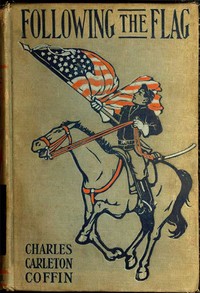
Following the Flag, from August 1861 to November 1862, with the Army of the…
If you think Civil War history is all about generals' strategies and dates of battles, this book will change your mind. Charles Carleton Coffin was a Boston journalist who packed his notebook and literally followed the Union Army for fifteen months. He didn't have an officer's commission or a safe desk job. He slept in tents, ate hardtack, and walked with the soldiers, all to send dispatches back to his newspaper. This book is his collected eyewitness account.
The Story
The book doesn't have a fictional plot, but it has a powerful narrative arc. It starts in August 1861, when many still believed the war would be short and glorious. Coffin travels with raw, enthusiastic recruits. We see them train, joke, and dream of quick victory. Then, he takes us into the heart of major campaigns like the Peninsula Campaign and the Battle of Antietam. The story he tells is the story of an army—and a nation—growing up fast under fire. The tone shifts from optimism to grim determination as Coffin describes the chaos of battle, the agony of field hospitals, and the sheer scale of loss after fights like the Seven Days' Battles.
Why You Should Read It
What makes this book special is its immediacy. Coffin isn't analyzing events from fifty years later. He's telling you what he saw yesterday or last week. You get the dust, the rumors, the bad coffee, and the sudden terror of cannon fire. He introduces you to individual soldiers, not just regiments. You feel their boredom on long marches and their courage under fire. He also has a sharp eye for the odd, human moments that happen even in war—like a soldier trying to barter for pies from a local farmer just miles from where a battle will be fought. It makes the history feel real, not like names in a textbook.
Final Verdict
This book is perfect for anyone who loves personal stories from history. If you enjoy podcasts or documentaries that make the past feel alive, you'll love this. It's also great for fans of military history who want the ground-level view, not just the view from headquarters. Because it's written in clear, journalistic prose from the 1860s, it's very readable today. It’s not a dry analysis; it’s a front-row seat to one of the most defining periods in American history, held open by a reporter who was determined to see it for himself.
This book is widely considered to be in the public domain. It serves as a testament to our shared literary heritage.
Joseph Gonzalez
1 year agoThe layout of the digital version made it easy to start immediately, the footnotes provide extra depth for those who want to dig deeper. A rare gem in a sea of mediocre content.
Emily Anderson
1 year agoA bit long but worth it.
Logan King
4 months agoTo be perfectly clear, the storytelling feels authentic and emotionally grounded. I couldn't put it down.
Karen Hill
7 months agoPerfect.


Linda Brown
8 months agoExceptional clarity on a very complex subject.