
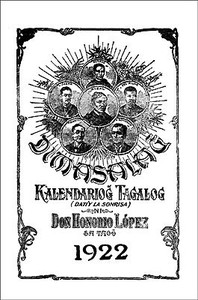
Dimasalang Kalendariong Tagalog (1922) by Honorio López
Let's clear something up first: this isn't a storybook with a plot. The Dimasalang Kalendariong Tagalog is exactly what it says—a calendar for the year 1922. But in the hands of editor and writer Honorio López, it became so much more. It was a yearly publication packed with everything a Filipino might need or want to read.
The Story
There's no linear plot. Instead, each page offers a different glimpse into life. You open it and find practical things: moon phases, planting schedules, and lists of holidays. Then, you turn the page and read a short story about a family dilemma. Another section might have a patriotic essay, while a cartoon pokes fun at politicians. There are recipes, health tips, biographies of heroes, and even puzzles. It's a chaotic, wonderful mix of the serious and the silly, the practical and the profound. The 'story' it tells is the story of a nation figuring itself out—what it meant to be Filipino under American rule, how to modernize without losing tradition, and what people laughed and worried about day to day.
Why You Should Read It
I loved this because it’s history without the dust. Textbooks give you dates and laws; this calendar gives you the heartbeat. You feel the pride in sections about language and heroes. You sense the anxiety in articles about economic survival. The humor, often sharp and satirical, shows a people who weren't just passive subjects but critical observers of their time. Reading a farming tip followed by a romantic poem reminds you that life then, as now, was a balance of survival and sentiment. It makes the past feel real, complex, and full of personality. It’s a powerful reminder that our ancestors were just as clever, worried, and hopeful as we are.
Final Verdict
This is a treasure for the curious. It's perfect for anyone interested in Philippine history, culture, or sociology who wants to go beyond the usual narratives. Writers and artists will find a goldmine of inspiration in its everyday details. It’s also great for Filipinos abroad looking for a tangible, deeply personal link to their heritage. Fair warning: it’s not a page-turner in the traditional sense. Dip into it like you would an old family scrapbook—a little at a time, letting each piece sink in. If you approach it with an open mind, you’ll find one of the most authentic and engaging records of Filipino life from a century ago.
There are no legal restrictions on this material. Enjoy reading and sharing without restrictions.
Susan Jones
2 years agoI stumbled upon this title during my weekend research and the attention to detail regarding the core terminology is flawless. Thanks for making such a high-quality version available.
Kimberly Miller
3 months agoThought-provoking and well-organized content.
David Rodriguez
1 year agoIf you're tired of surface-level information, the logic behind each conclusion is easy to follow and verify. It cleared up a lot of the confusion I had previously.



Sarah Martin
2 years agoSolid information without the usual fluff.